The global nutraceuticals and food additives market is undergoing a fundamental shift. Consumers no longer accept a trade-off between efficacy and clean labeling. They want ingredients that are bioactive, bioavailable, and biologically produced—without petrochemical solvents or unsustainable extraction methods. For formulators of anti-aging skincare, functional foods, and dietary supplements, the question is no longer which active ingredient works, but who can supply it at pharmaceutical-grade purity with industrial-scale reliability.
N-Acetylneuraminic Acid: From Human Cells to Skincare Formulations
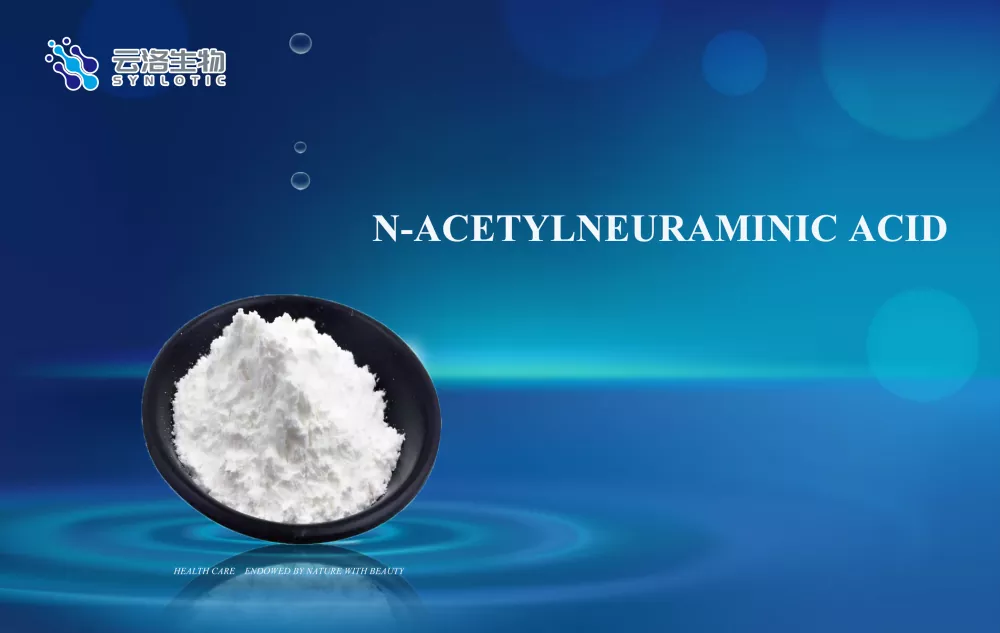
Among the most clinically validated ingredients in Synlotic's portfolio is N-Acetylneuraminic acid (CAS: 131-48-6) —the predominant sialic acid found in human cells and many mammalian cells. Approved by the China FDA as a cosmetic ingredient, N-Acetylneuraminic acid has already been incorporated into creams, face masks, essences, and sprays launched by manufacturers in South Korea, Japan, and other Asian markets.
Why This Molecule Matters for Nutraceuticals and Food Additives
While N-Acetylneuraminic acid is widely recognized in topical skincare for its anti-wrinkle, antioxidant, skin-protecting, moisturizing, and whitening effects, its potential within nutraceuticals and food additives is equally significant. As a naturally occurring sialic acid, it plays roles in cellular communication, immune modulation, and brain development. Oral formulations containing N-Acetylneuraminic acid are increasingly explored for cognitive health and aging support—positioning it as a dual-use ingredient bridging cosmetics and functional foods.
Synlotic supplies N-Acetylneuraminic acid as a high-purity white powder at competitive factory prices, with reliable delivery schedules. For manufacturers developing new anti-aging skincare lines or enhancing existing nutraceuticals and food additives portfolios, the ingredient offers a clinically backed, regulatorily approved entry point.
PQQ: The Mitochondrial Ingredient Crossing from Supplements to Functional Foods
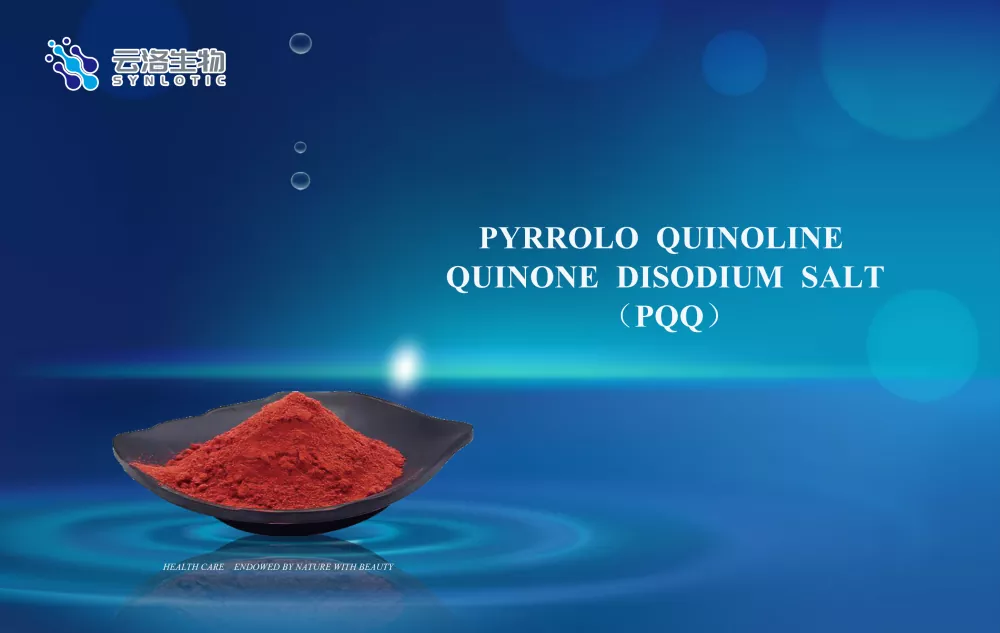
Another cornerstone of Synlotic's ingredient portfolio is Pyrroloquinoline Quinone Disodium Salt (PQQ, CAS: 72902-34-3) —a small molecule redox cofactor that has attracted substantial research interest for mitochondrial biogenesis, neuroprotection, and energy metabolism.
PQQ in Nutraceuticals and Food Additives
PQQ is not a new ingredient in the dietary supplement space, but its migration into functional beverages and fortified foods is accelerating. As a white powder with a molecular weight of 330.21 (C₁₄H₆N₂O₈), PQQ offers stability and compatibility with dry and liquid formulations. Within the category of nutraceuticals and food additives , PQQ serves two primary roles:
Mitochondrial support: Promotes the growth of new mitochondria, translating to cellular energy and metabolic health.
Synlotic operates as a direct PQQ supplier from China, offering wholesale pricing, professional technical support, and documented purity. For supplement contract manufacturers and functional food brands, sourcing PQQ from a GMP-certified facility with synthetic biology process control reduces supply chain risk.
Parameter
Detail
INCI Name
Pyrroloquinoline Quinone Disodium Salt
Molecular formula
C₁₄H₆N₂O₈
CAS Number
72902-34-3
Molecular weight
330.21
Appearance
White powder
Composition
100%
The Synthetic Biology Advantage: Why Fermentation Beats Extraction
Traditional production of high-value nutraceuticals and food additives often relies on chemical synthesis (leaving solvent residues) or natural extraction (limited scalability, variable purity). Synlotic's platform is built on synthetic biology, specifically:
Cell factory construction: Engineered microorganisms produce target molecules directly from renewable feedstocks.
Biological fermentation: Scalable, consistent, and low environmental footprint.
Enzyme catalysis: Enables stereospecific transformations impossible with traditional chemistry.
This technological foundation allows Synlotic to supply ingredients including Ectoin, Ceramide, Hydroxypropyl Tetrahydropyranone, Ergothioneine, and Phosphatidylserine —all of which fall within the broader nutraceuticals and food additives category. For buyers, the practical implication is batch-to-batch consistency, traceable raw material origins, and reduced impurity profiles.
Quality Infrastructure: R&D Center and GMP Production
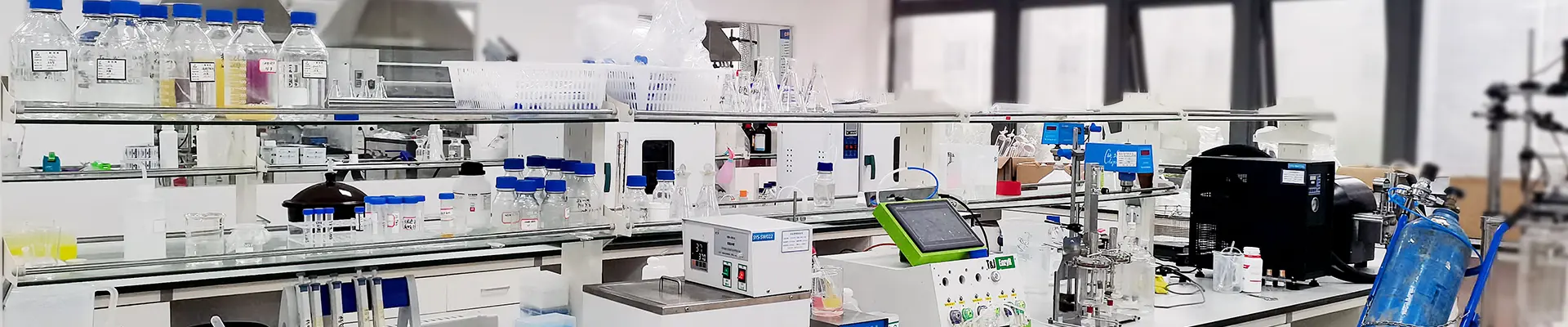
Synlotic's physical plant is designed to support regulated industries. The R&D center in Fengxian Oriental Meigu comprises 1,000 square meters of laboratory space, equipped for enzyme gene mining, fermentation process development, and analytical method validation. The adjacent 2,500-square-meter GMP production facility handles scale-up and commercial manufacturing.
Key operational capabilities include:
Capability
Application
Enzyme gene mining
Discovery of novel biocatalysts for proprietary manufacturing routes
Enzyme-directed transformation
Regio- and enantioselective modifications of target molecules
Cell factory construction
Microbial strains optimized for yield and purity
Biological fermentation
Industrial-scale production of nutraceuticals and food additives
Enzyme catalysis
Low-temperature, low-solvent green chemistry processes
This infrastructure supports products across multiple sectors: high-end cosmetic ingredients, pharmaceutical intermediates (including phospholipid excipients), nutraceuticals and food additives (Phosphatidylserine, Ergothioneine), and enzyme preparations (Proteinase K, Glucose Dehydrogenase, Recombinant Trypsin).
Market Positioning: China-Based, Globally Focused
Synlotic's establishment in 2020 coincided with a surge in global demand for fermentation-derived ingredients. Unlike traditional Chinese ingredient suppliers that focus exclusively on price competition, Synlotic competes on three vectors:
Technology: Synthetic biology platforms enable novel molecules or more economical routes to existing molecules.
Compliance: GMP production facility and documented quality systems suitable for cosmetic, nutraceutical, and pharmaceutical customers.
Transparency: R&D and production under one management structure, reducing supply chain opacity.
For international buyers of nutraceuticals and food additives , Synlotic offers an alternative to European or Japanese suppliers—comparable technical capability with shorter supply lines and competitive factory-direct pricing.
Synlotic Biotech (Shanghai) Co., Ltd. was established in 2020, leveraging synthetic biology as its core technology. The company specializes in the research and development of green high-tech solutions including enzyme gene mining, enzyme-directed transformation, cell factory construction, biological fermentation, and enzyme catalysis. These technologies are applied to natural flavors, high-end cosmetic ingredients, pharmaceutical intermediates, enzyme preparations, and nutraceuticals and food additives .
The R&D center is situated in Fengxian Oriental Meigu, Shanghai, featuring a 1,000-square-meter state-of-the-art laboratory and a 2,500-square-meter GMP production facility. Adhering to the principles of scientific research and innovation, Synlotic Biotechnology is dedicated to providing environmentally friendly and sustainable solutions through the application of synthetic biology.
We use cookies to offer you a better browsing experience, analyze site traffic and personalize content. By using this site, you agree to our use of cookies.
Privacy Policy